FEALAC
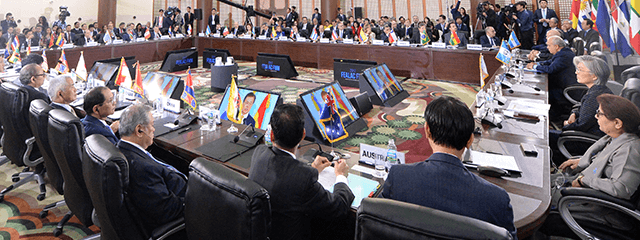
The Forum for East Asia-Latin America Cooperation (FEALAC) is an inter-regional multilateral forum launched in 1999 with the aim to promote better understanding, political and economic dialogue and cooperation in all areas so as to achieve more effective and fruitful relations and closer cooperation between the two regions.
It is currently made up of 36 member countries from East Asia and Latin America.
It is currently made up of 36 member countries from East Asia and Latin America.
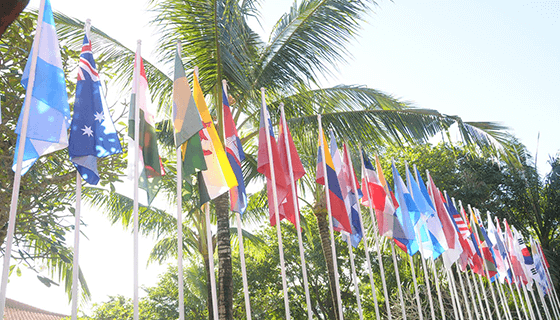
FEALAC is a unique regular official platform for dialogue between the two regions.
It mainly consists of regular meetings held at three levels: the Foreign Ministers (FMM), the Senior Officials (SOM) and the Working-level Officials (WG).
The Coordination Meeting is also convened back to back with the Senior Officials’ Meeting and the Ministerial Meeting.
It mainly consists of regular meetings held at three levels: the Foreign Ministers (FMM), the Senior Officials (SOM) and the Working-level Officials (WG).
The Coordination Meeting is also convened back to back with the Senior Officials’ Meeting and the Ministerial Meeting.
Background & History
East Asia and Latin America, both comprised mainly of developing countries, are economically dynamic and complementary to each other. Amid the global trend toward regional integration and cooperation, the absence of an official intercontinental mechanism highlighted the growing need for structured cooperation between the two regions.
Meanwhile, Singapore’s Prime Minister Goh Chok Tong suggested to the then President of Chile, Eduardo Frei, ways to increase cooperation between East Asia and Latin America during an official visit to Chile in September 1998. Building on this initiative, the East Asia–Latin America Forum (EALAF) was officially launched at the first Senior Officials’ Meeting held in Singapore in September 1999, laying the foundation for sustained inter-regional dialogue and cooperation.
Meanwhile, Singapore’s Prime Minister Goh Chok Tong suggested to the then President of Chile, Eduardo Frei, ways to increase cooperation between East Asia and Latin America during an official visit to Chile in September 1998. Building on this initiative, the East Asia–Latin America Forum (EALAF) was officially launched at the first Senior Officials’ Meeting held in Singapore in September 1999, laying the foundation for sustained inter-regional dialogue and cooperation.
1st
Foreign
Ministers’
Meeting
Ministers’
Meeting
29-30 March 2001
Santiago, Chile
At the 1st Foreign Ministers’ Meeting held in Santiago, Chile, Member Countries agreed to rename the Forum from EALAF to the Forum for East Asia–Latin America Cooperation (FEALAC). The Meeting approved the Framework Document, which set out FEALAC’s objectives, guiding principles, and scope of cooperation.
2nd
Foreign
Ministers’
Meeting
Ministers’
Meeting
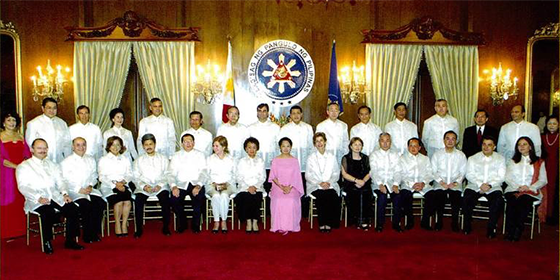
30-31 January 2004
Manila, Philippines
The 2nd Foreign Ministers’ Meeting, held in Manila, Philippines, adopted the Manila Plan of Action, providing detailed guidance on measures to enhance mutual understanding and cooperation between the two regions.
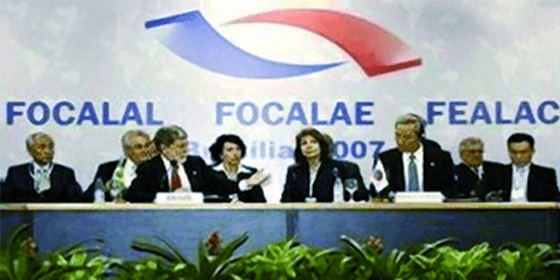
3rd
Foreign
Ministers’
Meeting
Ministers’
Meeting
22-23 August 2007
Brasilia, Brazil
At the 3rd Foreign Ministers’ Meeting in Brasilia, Brazil, Member Countries adopted the Brasilia Ministerial Declaration and Programme of Action, which underscored the need for cooperation on global issues such as climate change and the Doha Development Agenda, while also calling for strengthened cooperation in trade, investment, and regional financial institutions.
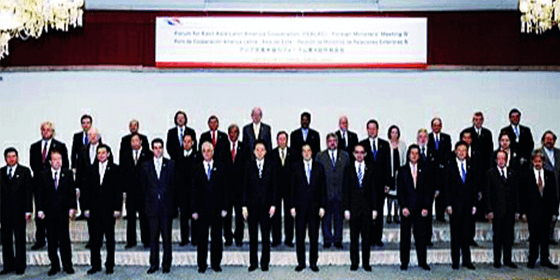
4th
Foreign
Ministers’
Meeting
Ministers’
Meeting
16-17 January 2010
Tokyo, Japan
The 4th Foreign Ministers’ Meeting, held in Tokyo, Japan, adopted the Tokyo Declaration, emphasizing the importance of enhanced bi-regional cooperation in response to global crises. The Meeting also agreed, inter alia, on the establishment of the FEALAC Cyber Secretariat by the Republic of Korea.
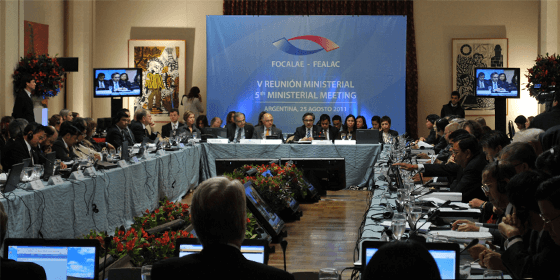
5th
Foreign
Ministers’
Meeting
Ministers’
Meeting
25 August 2011
Buenos Aires, Argentina
At the 5th Foreign Ministers’ Meeting in Buenos Aires, Argentina, Member Countries adopted the Buenos Aires Declaration, which addressed the reform of global governance mechanisms and outlined plans to strengthen cooperation between FEALAC and regional economic and financial institutions, including ECLAC, IDB, ADB, and ESCAP. The Meeting also established the Vision Group to provide mid- to long-term goals and strategic guidance for FEALAC.
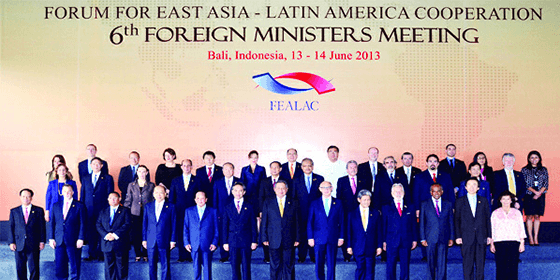
6th
Foreign
Ministers’
Meeting
Ministers’
Meeting
13-14 June 2013
Bali, Indonesia
The 6th Foreign Ministers’ Meeting, held in Bali, Indonesia, adopted the Uluwatu Declaration, endorsing the recommendations of the Vision Group aimed at evaluating and enhancing FEALAC cooperation. The Meeting further highlighted the need to strengthen communication among Member Countries through the effective utilization of the FEALAC Cyber Secretariat.
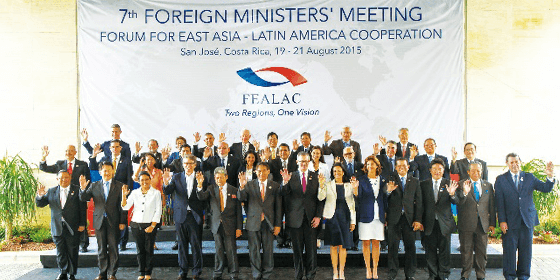
7th
Foreign
Ministers’
Meeting
Ministers’
Meeting
21 August 2015
San Jose, Costa Rica
At the 7th Foreign Ministers’ Meeting in San Jose, Costa Rica, Member Countries adopted the Declaration of San Jose, which emphasized the importance of strategic alliances among FEALAC Member Countries, as well as with international organizations and financial institutions from both regions. The Meeting also adopted the Guideline for FEALAC Working Process to improve the Forum’s operational efficiency and enhance the use of the Cyber Secretariat.
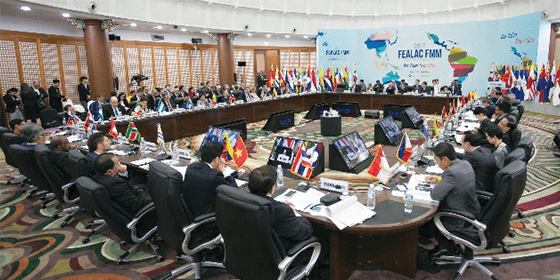
8th
Foreign
Ministers’
Meeting
Ministers’
Meeting
31 August 2017
Busan, Korea
The 8th Foreign Ministers’ Meeting, held in Busan, Republic of Korea, adopted the Busan Declaration, endorsing key initiatives including the New FEALAC Action Plan, FEALAC Troika Modalities, and the establishment of the FEALAC Multi-donor Trust Fund. The Meeting underscored the importance of FEALAC-wide projects supported by the FEALAC Fund in promoting inter-regional dialogue and mutual understanding.
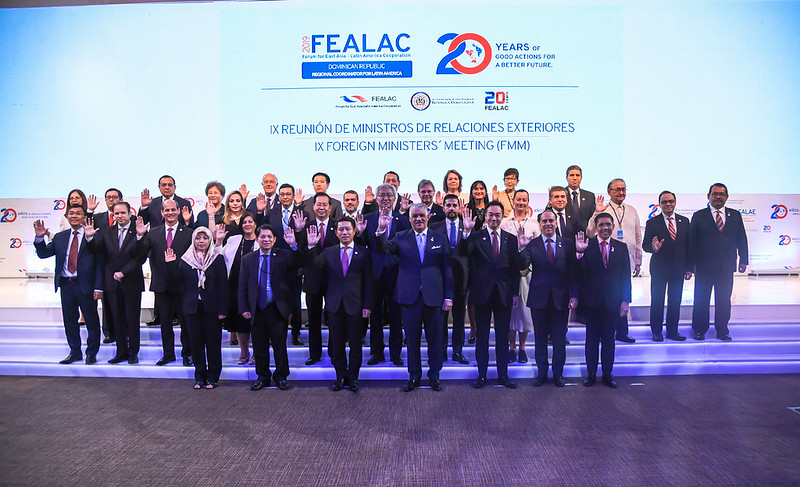
9th
Foreign
Ministers’
Meeting
Ministers’
Meeting
9 November 2019
Santo Domingo, Dominican Republic
The 9th Foreign Ministers’ Meeting in Santo Domingo, Dominican Republic, adopted the Santo Domingo Declaration in celebration of FEALAC’s 20th anniversary. Member States reaffirmed their commitment to strengthening FEALAC’s working mechanisms and enhancing its visibility. Key outcomes included discussions on the possible convening of a FEALAC Special Commemorative Summit, the adoption of a rotational system for Regional Coordinators when deemed necessary, and the incorporation of Climate Change into the Socio-Political Cooperation, Sustainable Development Working Group, which was subsequently renamed to reflect its expanded mandate.
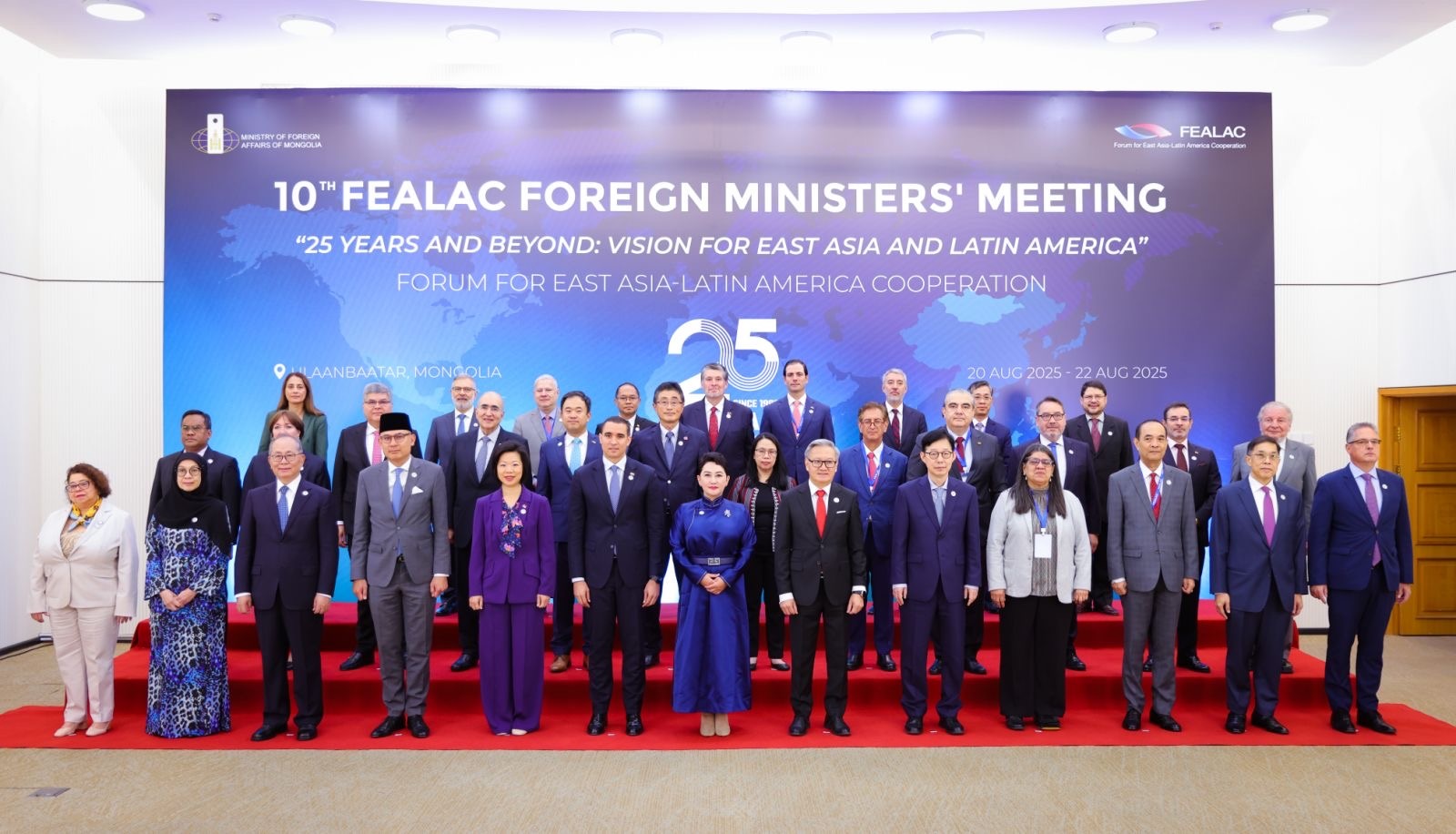
10th
Foreign
Ministers’
Meeting
Ministers’
Meeting
22 August 2025
Ulaanbaatar, Mongolia
The 10th Foreign Ministers’ Meeting was held in Ulaanbaatar, Mongolia, under the theme “25 Years and Beyond: Vision for East Asia and Latin America.” The Meeting reviewed FEALAC’s achievements over the past 25 years and discussed priorities for future cooperation in response to evolving global challenges. The Ulaanbaatar Declaration was adopted as the principal outcome, outlining strategic directions with a focus on economic connectivity, sustainable and inclusive development, environmental cooperation, people-to-people exchanges, and responses to global challenges. The Meeting also reviewed progress under the New FEALAC Action Plan marking FEALAC’s 25th anniversary and reaffirmed Member States’ commitment to strengthened cooperation, an improved institutional framework, and enhanced visibility of the Forum.
Quick Facts
ESTABLISHMENT
1999
FEALAC celebrates its 25th anniversary in 2024.
MEMBERSHIP
36
FEALAC has 16 East Asian and 20 Latin American member countries.
FUND PROJECTS
3
FEALAC implements three FEALAC-wide Projects under the FEALAC Fund.
FEALAC PROJECTS
628
FEALAC member countries have implemented 628 national and regional projects since 1999.
Objectives
The key objectives of FEALAC are:
- To increase mutual understanding, trust, political dialogue, and friendly cooperation among member states with a view to enriching and sharing experiences and developing new partnerships;
- To tap the potential of multidisciplinary cooperation, inter alia, in economy, trade, investment, finance, science and technology, environment protection, culture, sport, tourism and people-to-people exchanges; and
- To expand common ground on important international political and economic issues with a view to working together in different international fora in order to safeguard common interests.
Principles
FEALAC should be forward looking and future oriented. It will be voluntary, informal and flexible in its working procedures. It will conduct itself in accordance with basic principles of international law, in particular:

respect for each other's sovereignty and territorial integrity

non-interference in each other's internal affairs

equality, mutual benefit, and the common goal of development

respect for each other's unique culture and social values

decision-making by consensus